
-
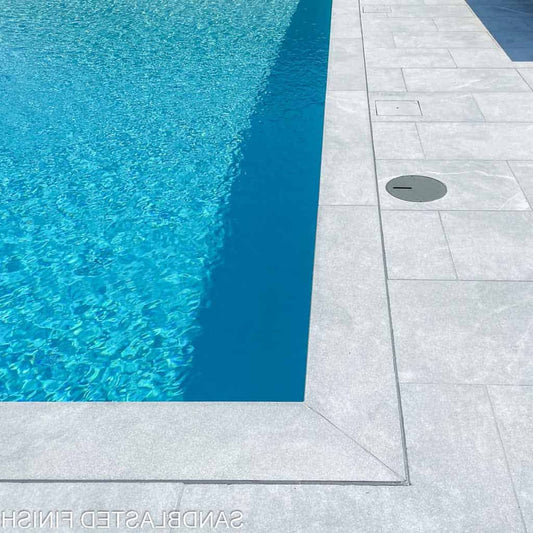
Ocean Blue Marble Sandblasted Eased Edge 24x36 2" Pool Coping
Regular price $3,500.00 USDRegular price -
Ocean Blue Marble Sandblasted Bullnosed 24x36 2" Pool Coping
Regular price $3,500.00 USDRegular price -
Ocean Blue Marble Leather Eased Edge 24x36 2" Pool Coping
Regular price $3,500.00 USDRegular price -
Ocean Blue Marble Leather Bullnosed 24x36 2" Pool Coping
Regular price $3,500.00 USDRegular price -
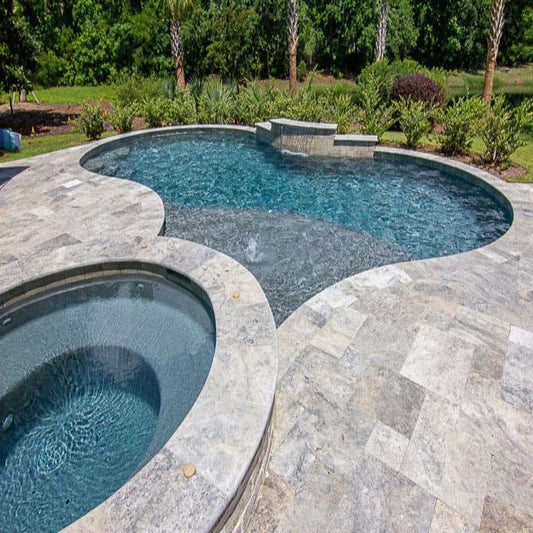
Silver Alaska Travertine Eased Edge 24x36 2" Pool Coping
Regular price $3,500.00 USDRegular price -
Silver Alaska Travertine Bullnosed 24x36 2" Pool Coping
Regular price $3,500.00 USDRegular price -
Silver River Travertine Eased Edge 24x36 2" Pool Coping
Regular price $3,500.00 USDRegular price -
Silver River Travertine Bullnosed 24x36 2" Pool Coping
Regular price $3,500.00 USDRegular price -
Country Classic Travertine Eased Edge 24x36 2" Pool Coping
Regular price $3,500.00 USDRegular price -
Country Classic Travertine Bullnosed 24x36 2" Pool Coping
Regular price $3,500.00 USDRegular price -
Silver Travertine Eased Edge 24x36 2" Pool Coping
Regular price $3,500.00 USDRegular price -
Silver Travertine Bullnosed 24x36 2" Pool Coping
Regular price $3,500.00 USDRegular price -
Noce Travertine Eased Edge 24x36 2" Pool Coping
Regular price $3,500.00 USDRegular price -
Noce Travertine Bullnosed 24x36 2" Pool Coping
Regular price $3,500.00 USDRegular price -
Walnut Travertine Eased Edge 24x36 2" Pool Coping
Regular price $3,500.00 USDRegular price -
Walnut Travertine Bullnosed 24x36 2" Pool Coping
Regular price $3,500.00 USDRegular price -
Ivory Travertine Eased Edge 24x36 2" Pool Coping
Regular price $3,500.00 USDRegular price -
Ivory Travertine Bullnosed 24x36 2" Pool Coping
Regular price $3,500.00 USDRegular price






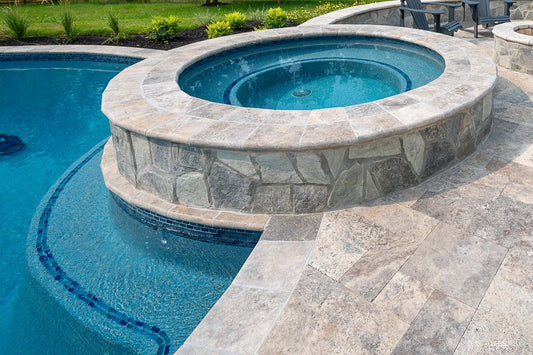

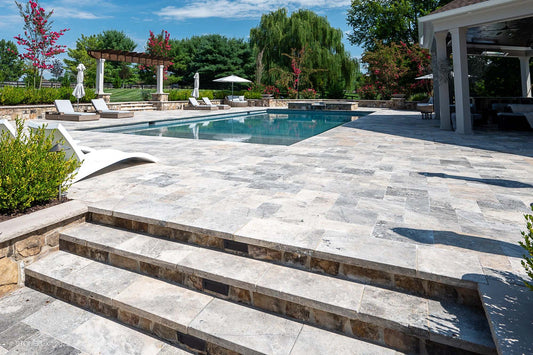

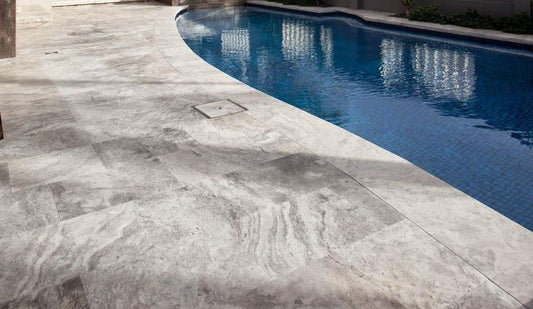


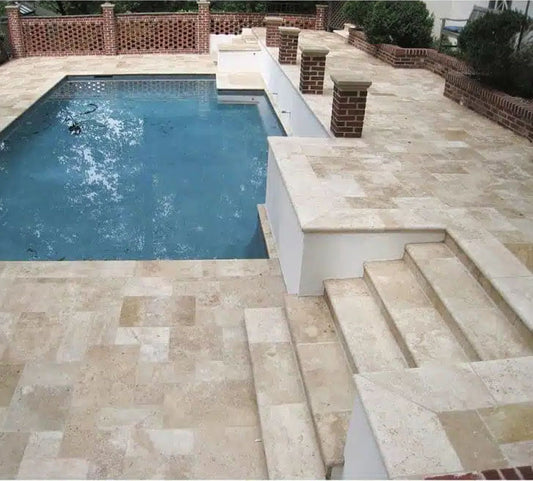

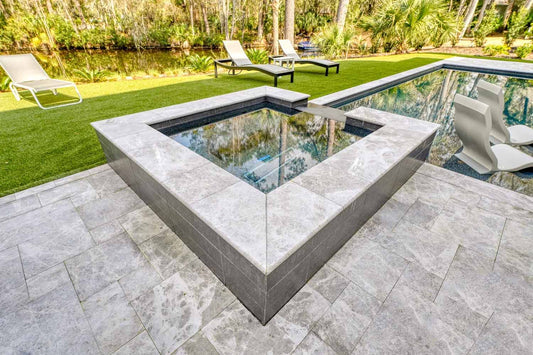

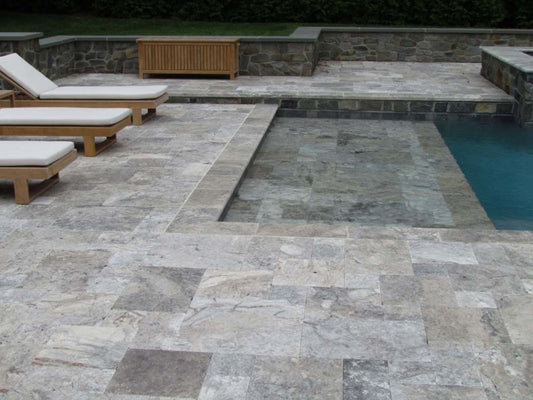

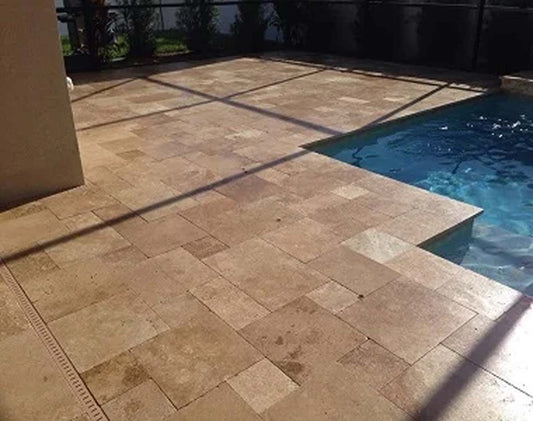


24x36 coping: three linear feet, two-inch thick
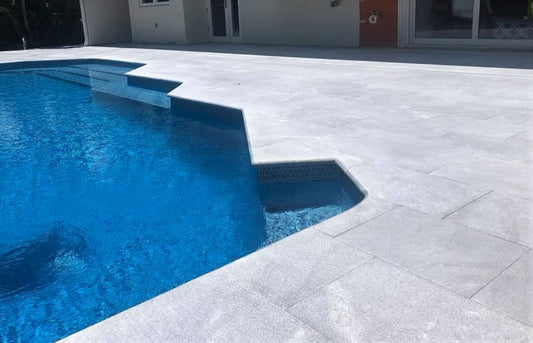
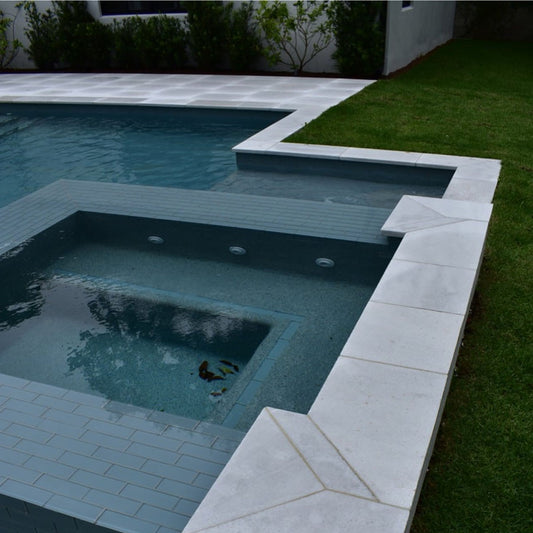
A 24x36 piece runs 3 linear feet along the water and 24" back, so it does the work of a coping stone and the first deck course at once. That is the reason it exists: on a wide bond beam, a spa surround, a tanning ledge or a seat wall you can cap the whole structure with one row of stone and no back joint. On a 60 ft straight run you lay 20 pieces. It is not a curve stone; a 36" piece on a radius needs wedge cuts at every joint, so keep it for rectangular pools and straight walls and use 6x12 coping where the shape bends.
Thickness, profiles, deck match
Everything in this collection is 2" thick. There is no 1-1/4" option at this size, and for good reason: a 24x36 at 1-1/4" would be too fragile to handle and to overhang. Bullnose and eased edge are available in equal numbers. The natural deck match is 24x36 pavers or 24x48 pavers, also 2", so joints carry through on a large-format layout. Marble pieces are leather or sandblasted in seven colors including Bursa White, Ice White and Tundra Grey; travertine covers Ivory, Walnut, Noce, Silver, Silver River, Silver Alaska and Country Classic. For an even longer bullnose piece, 16x48 coping gives 4 linear feet at 16" depth. Weights are on each product page, and the freight delivery guide explains how heavy pallets arrive curbside.
Frequently asked questions
How many 24x36 pieces do I need for a spa surround?
Measure the outside perimeter of the spa wall in feet and divide by 3, since each piece is 36 inches long, then add about 15 percent because square spas need mitered corners and round spas need wedge cuts. Check that the wall is no wider than 22 inches so the 24 inch cap overhangs.
Is 24x36 coping available in 1-1/4 inch?
No. All 24x36 coping is 2 inches thick. A piece this large needs the thickness to survive handling and to cantilever over the water or a wall edge without cracking. Pair it with 2 inch pavers so the surfaces meet flush.
Can I use 24x36 as a step tread?
Yes. Pool steps, raised patio steps and wide seat walls are common uses. The 24 inch depth gives a full tread, the bullnose or eased front edge finishes the nosing, and the 3 foot length reduces joints on wide steps.