
-
Ibiza White Marble Sandblasted 16x24 1-1/4" Paver
Regular price $1,934.24 USDRegular price -
Ibiza White Marble Sandblasted 12x24 1-1/4" Paver
Regular price $1,450.68 USDRegular price -
Ibiza White Marble Sandblasted 12x12 1-1/4" Paver
Regular price $1,934.24 USDRegular price -
Ibiza White Marble Sandblasted 6x12 1-1/4" Paver
Regular price $1,978.20 USDRegular price -
Ibiza White Marble Sandblasted French Pattern 1-1/4" Paver
Regular price $1,934.24 USDRegular price -
Bursa White Marble Sandblasted 24x48 2" Paver
Regular price $1,318.80 USDRegular price -
Bursa White Marble Sandblasted 24x36 2" Paver
Regular price $3,500.00 USDRegular price -
Bursa White Marble Sandblasted 24x24 2" Paver
Regular price $2,100.00 USDRegular price -
Bursa White Marble Sandblasted 16x24 2" Paver
Regular price $1,960.00 USDRegular price -
Bursa White Marble Sandblasted 12x24 2" Paver
Regular price $1,440.00 USDRegular price -
Bursa White Marble Sandblasted 6x12 2" Paver
Regular price $1,197.91 USDRegular price -
Bursa White Marble Sandblasted 36x36 1-1/4" Paver
Regular price $2,700.00 USDRegular price -
Bursa White Marble Sandblasted 24x48 1-1/4" Paver
Regular price $2,198.00 USDRegular price -
Bursa White Marble Sandblasted 24x36 1-1/4" Paver
Regular price $3,500.00 USDRegular price -
Bursa White Marble Sandblasted 24x24 1-1/4" Paver
Regular price $1,450.68 USDRegular price -
Bursa White Marble Sandblasted 16x16 1-1/4" Paver
Regular price $2,579.35 USDRegular price -
Bursa White Marble Sandblasted 16x24 1-1/4" Paver
Regular price $1,934.24 USDRegular price -
Bursa White Marble Sandblasted 12x24 1-1/4" Paver
Regular price $1,450.68 USDRegular price -
Bursa White Marble Sandblasted 12x12 1-1/4" Paver
Regular price $1,934.24 USDRegular price -
Bursa White Marble Sandblasted 6x12 1-1/4" Paver
Regular price $1,978.20 USDRegular price -
Bursa White Marble Sandblasted French Pattern 1-1/4" Paver
Regular price $1,934.24 USDRegular price -
Ice White Marble Sandblasted 24x48 2" Paver
Regular price $1,318.80 USDRegular price -
Ice White Marble Sandblasted 24x36 2" Paver
Regular price $3,500.00 USDRegular price -
Ice White Marble Sandblasted 24x24 2" Paver
Regular price $2,100.00 USDRegular price


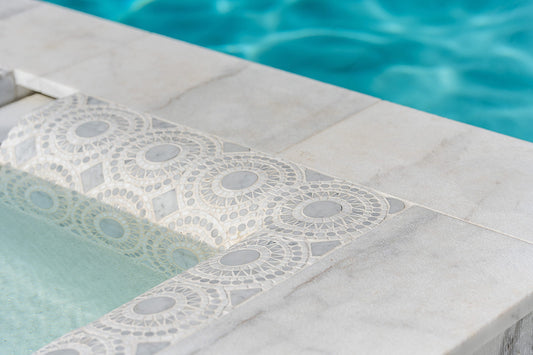


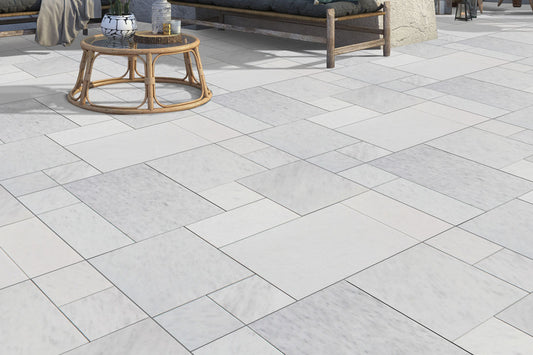


Sandblasted Marble Pavers: What the Finish Is and Where It Belongs
Sandblasting fires fine abrasive at the cut face of the marble and leaves a uniform matte texture, somewhere between fine sandpaper and suede. It is a finish, not a color: any marble can be sandblasted, and the same stone is also cut leather (a lower-sheen brushed texture with square edges) and tumbled (softened edges, an aged look). The reason sandblasted is the most-ordered marble finish for pool decks is grip. The texture holds a wet foot better than leather and far better than honed or polished, it does not change with wear, and it takes a sealer well because the open face lets it penetrate.
How it looks
Sandblasting lightens a stone. The texture scatters light, so a sandblasted Ice White reads chalk-white, a sandblasted gray reads a shade paler than the same stone leather-finished, and veining is softened rather than sharp. If you want the color at its deepest, choose leather; if you want it at its brightest and most forgiving of dust and water spots, choose sandblasted. Edges are square on a sandblasted paver, which suits a modern layout in 24x24 or 24x48 as well as a traditional French pattern.
Sandblasted marble vs travertine
Both grip well wet. Tumbled travertine stays cooler in full sun because it is porous; sandblasted marble is denser, holds a crisper edge, comes in true whites and grays that travertine does not, and shows less piece-to-piece variation. In a hot climate on a barefoot deck, a light sandblasted marble is close to travertine for comfort; a dark one is not. The marble vs travertine comparison goes through heat, cost and winter.
Care
Seal with a penetrating sealer after the joints cure and every two to four years; the open texture takes sealer well and holds it. Clean with a pH-neutral stone cleaner, never an acid; marble etches. The texture does not trap dirt the way travertine pits can, so a hose and a soft brush is the usual routine. Match the field with sandblasted pool coping in the same stone so the edge grips as well as the deck does.
Frequently asked questions
What does sandblasted marble mean?
A surface finish: fine abrasive is blasted at the cut face to leave a uniform matte texture. It is not a color. Any marble can be sandblasted, and the same stones are also sold leather or tumbled.
Is sandblasted marble slippery when wet?
No. It is the grippiest marble finish and the one most pool builders specify for decks and coping. Polished and honed marble are slippery wet; sandblasted and tumbled are not.
Is sandblasted marble good for a pool deck?
Yes. Wet grip, a cool light surface in the lighter colors, square edges for a clean layout, and it takes sealer well. Pair it with sandblasted coping in the same stone.
Sandblasted marble or travertine for a pool deck?
Travertine runs cooler in full sun and costs less; sandblasted marble gives true whites and grays, crisper edges and less variation. Light sandblasted marble is close to travertine for barefoot comfort; dark marble is not.
Does sandblasted marble need to be sealed?
Yes, a penetrating sealer after installation and every two to four years. The open texture takes sealer well. Use pH-neutral cleaners; acids etch marble regardless of finish.