
-
Pistachio Limestone Leather 24x24 2" Paver
Regular price $2,100.00 USDRegular price -
Pistachio Limestone Leather 16x24 2" Paver
Regular price $1,960.00 USDRegular price -
Pistachio Limestone Leather 18x36 1-1/4" Paver
Regular price $1,409.26 USDRegular price -
Pistachio Limestone Leather 24x24 1-1/4" Paver
Regular price $1,252.68 USDRegular price -
Pistachio Limestone Leather 16x24 1-1/4" Paver
Regular price $1,800.00 USDRegular price -
Pistachio Limestone Leather 12x24 1-1/4" Paver
Regular price $1,252.68 USDRegular price -
Pistachio Limestone Leather 6x12 1-1/4" Paver
Regular price $1,708.20 USDRegular price -
Pistachio Limestone Leather French Pattern 1-1/4" Paver
Regular price $1,670.24 USDRegular price


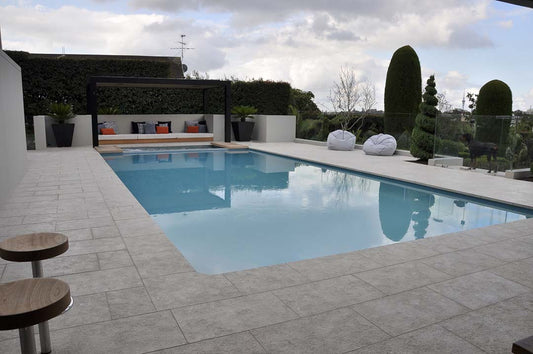

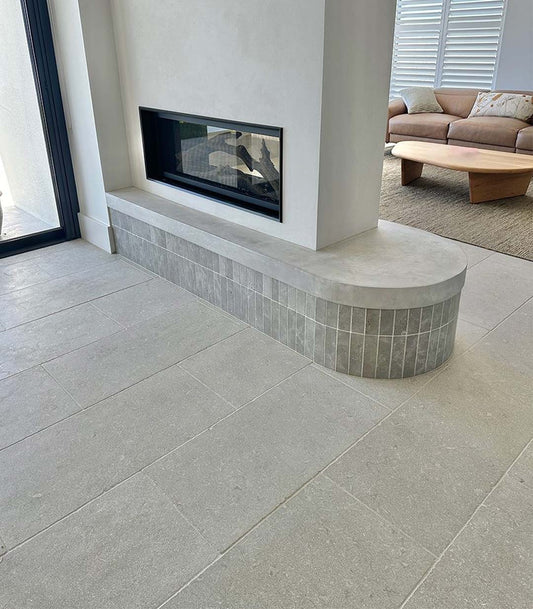

Pistachio Limestone Pavers: Color, Sizes and Pairings
Pistachio is an unusual color in the limestone range. The base is a pale beige, but a faint green-gray undertone runs through it, so next to a plain cream stone it looks cooler and slightly olive, and next to a gray stone it looks warm. That in-between quality is why designers use it: it bridges a warm house with a cool hardscape, or a gray pool interior with a beige patio. The leather finish brushes the surface to a soft texture with a low sheen and keeps the edges square for tight joints. We list it under beige, but order a sample; the green cast is easy to miss on a screen and obvious in daylight.
Sizes in the Pistachio range
Eight pavers in five sizes: 6x12, 12x24, 16x24, 18x36 and 24x24. Most are 1-1/4", with 2" listed on the larger pieces. The 18x36 plank is the format that sets Pistachio apart; a staggered plank layout along a pool or down a walkway gives a long, low rhythm that few stones offer in this color. The 6x12, 12x24 and 24x24 lay into a standard ashlar for a pool deck or terrace, and 16x24 works alone in a running bond. There is no Pistachio coping or tread; for the pool edge, a gray-beige marble such as Tundra Grey or a beige Diane Royal from the pool coping collection sits well with it.
Pairing Pistachio
Pistachio does its best work against materials that pick up either side of its color. A charcoal basalt or gray porcelain border brings out the green-gray cast; a warm cedar fence or tan stucco brings out the beige. Its sister stone is Serpeggiante, a leather limestone with the same finish but a strong linear vein, and the two can be used together with Pistachio as the calm field and Serpeggiante as a feature band. Seal Pistachio with a natural-look penetrating sealer; an enhancing sealer darkens the olive tone more than most clients expect. Limestone should be cleaned with pH-neutral products and kept clear of fertilizer. The sealing and maintenance guide applies here, and the 2026 design trends article covers the move toward muted, in-between colors like this one in pool and patio work.
Frequently asked questions
Is Pistachio actually green?
Only faintly. It is a light beige limestone with a green-gray undertone that shows in daylight and against other stones. On its own it reads as a cool beige; next to a cream stone it looks slightly olive. Always order a sample and view it outdoors, wet and dry, before ordering pallets.
What sizes does Pistachio come in?
Five sizes: 6x12, 12x24, 16x24, 18x36 and 24x24, in 1-1/4 inch with 2 inch on the larger formats. The 18x36 plank is the distinctive piece and lays as a staggered bond. Every product page shows the square footage per pallet and the pallet weight.
Which coping goes with Pistachio pavers?
There is no Pistachio coping. A gray-beige marble such as Tundra Grey in a leather finish complements the cool undertone, and a beige Diane Royal coping suits a warmer scheme. Request samples of both alongside the Pistachio paver to see which reads better beside your pool finish.
How should Pistachio be sealed?
Use a natural-look penetrating sealer after installation and re-apply per the manufacturer's schedule. Avoid color-enhancing sealers unless you have tested one on a sample, because they deepen the olive tone noticeably. Clean with pH-neutral stone cleaners only, as acids etch limestone.