
-
Sandy Beige Basalt Brushed 12x24 1-1/4" Paver
Regular price $1,980.00 USDRegular price -
Sandy Beige Basalt Brushed 6x12 1-1/4" Paver
Regular price $2,700.00 USDRegular price -
Black Basalt Basalt Brushed 8x16 1-1/4" Paver
Regular price $2,640.00 USDRegular price -
Pistachio Limestone Leather 18x36 1-1/4" Paver
Regular price $1,409.26 USDRegular price -
Pistachio Limestone Leather 24x24 1-1/4" Paver
Regular price $1,252.68 USDRegular price -
Pistachio Limestone Leather 16x24 1-1/4" Paver
Regular price $1,670.24 USDRegular price -
Pistachio Limestone Leather 12x24 1-1/4" Paver
Regular price $1,252.68 USDRegular price -
Pistachio Limestone Leather 6x12 1-1/4" Paver
Regular price $1,708.20 USDRegular price -
Pistachio Limestone Leather French Pattern 1-1/4" Paver
Regular price $1,670.24 USDRegular price -
Sandy Beige Limestone Leather 24x24 1-1/4" Paver
Regular price $1,252.68 USDRegular price -
Sandy Beige Limestone Leather 16x24 1-1/4" Paver
Regular price $1,670.24 USDRegular price -
Sandy Beige Limestone Leather 12x24 1-1/4" Paver
Regular price $1,252.68 USDRegular price -
Sandy Beige Limestone Leather 6x12 1-1/4" Paver
Regular price $1,708.20 USDRegular price -
Sandy Beige Limestone Leather French Pattern 1-1/4" Paver
Regular price $1,670.24 USDRegular price -
Serpeggiante Limestone Leather 24x24 1-1/4" Paver
Regular price $1,252.68 USDRegular price -
Serpeggiante Limestone Leather 16x24 1-1/4" Paver
Regular price $1,670.24 USDRegular price -
Serpeggiante Limestone Leather 12x24 1-1/4" Paver
Regular price $1,252.68 USDRegular price -
Serpeggiante Limestone Leather 6x12 1-1/4" Paver
Regular price $1,708.20 USDRegular price -
Serpeggiante Limestone Leather French Pattern 1-1/4" Paver
Regular price $1,670.24 USDRegular price -
Lymra Limestone Tumbled 36x36 1-1/4" Paver
Regular price $1,708.20 USDRegular price -
Lymra Limestone Tumbled 24x48 1-1/4" Paver
Regular price $1,898.00 USDRegular price -
Lymra Limestone Tumbled 24x36 1-1/4" Paver
Regular price $3,500.00 USDRegular price -
Lymra Limestone Tumbled 18x36 1-1/4" Paver
Regular price $1,409.26 USDRegular price -
Lymra Limestone Tumbled 24x24 1-1/4" Paver
Regular price $1,252.68 USDRegular price


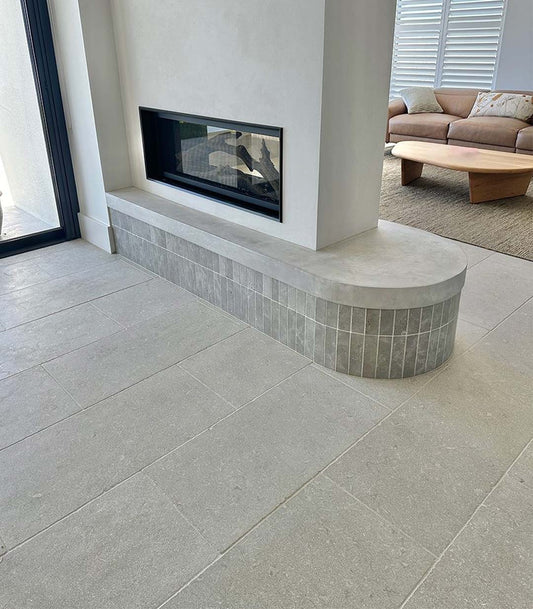


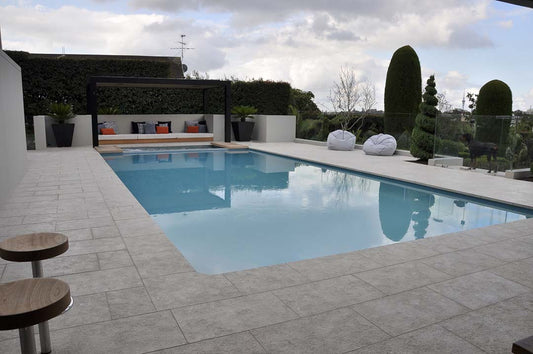


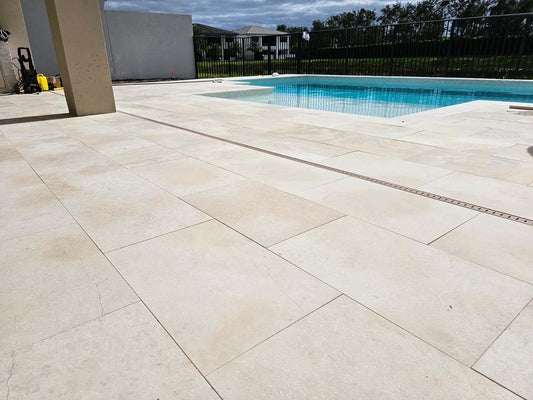


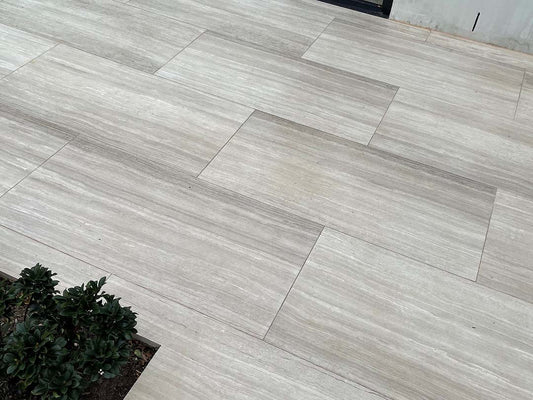





1-1/4 inch pavers: where this thickness is the right call
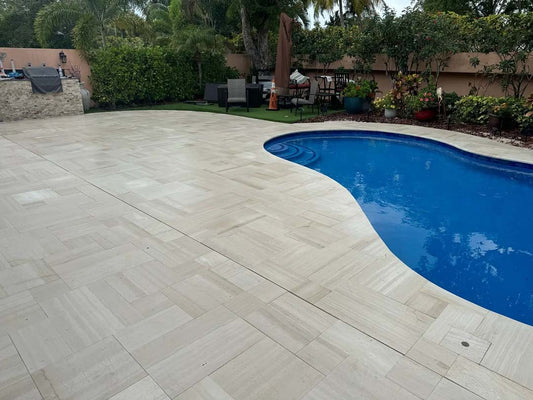
1-1/4", known at the quarry as 3cm, is the most-ordered thickness in natural stone paving and the one with the widest color and size range. It is the right specification for a mortar-set installation over a sound concrete slab carrying foot traffic. Where it is not the right call, the answer is 2" (5cm), and the difference matters more than most other decisions on the project.
Specify 1-1/4 inch when
- The pavers are being mortar-set or thin-set over an existing concrete slab or a new pour.
- Traffic is people and furniture, not vehicles.
- The climate does not go through hard freeze-thaw cycling.
- Height is constrained, at a door threshold or against an existing pool beam, where three quarters of an inch matters.
Use 2 inch instead when
Anything drives on it, the pavers are sand-set with no slab underneath, or the ground freezes and thaws through the winter. Those three conditions are not negotiable, and a 1-1/4" paver in any of them will crack. See 2" pavers for the range that covers them. Everything else being equal, 1-1/4" is lighter to handle, covers more ground per pallet and comes in more colors.
The range at this thickness
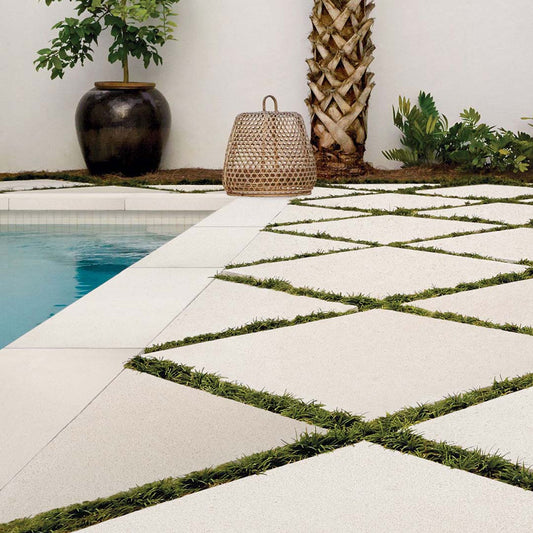
1-1/4" carries the broadest selection we stock: tumbled travertine, leather and sandblasted marble, and brushed limestone. Sizes run 6x12, 12x12, 16x16, 12x24, 16x24, 24x24, 24x36, 24x48 and 36x36. The French pattern sets, which combine four sizes into one repeating layout, are supplied at this thickness.
Getting the install right
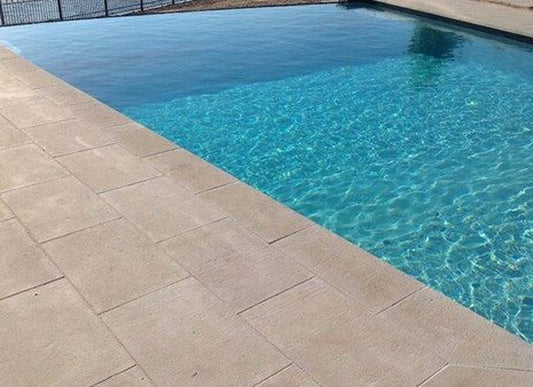
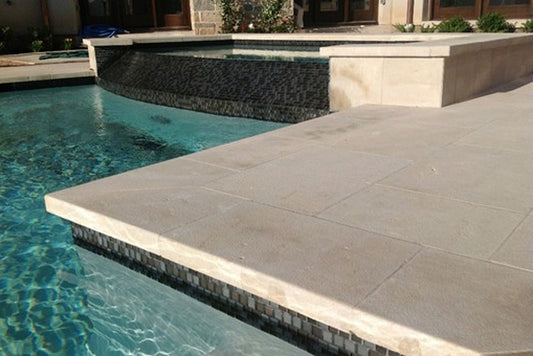
A 1-1/4" paver relies entirely on what is underneath it, so the slab needs to be sound, clean and properly sloped before anything is set. Cracks in the slab telegraph through. Use the right setting material for exterior stone rather than standard interior thinset, and leave the movement joints where the slab has them rather than bridging over. The buyers guide covers base preparation and joint spacing in more detail. Matching pool coping is available at the same thickness so the deck and pool edge sit flush, and it is worth ordering a sample before a pallet, since natural stone varies lot to lot. Browse by color at ivory or beige.
Frequently asked questions
Is 1-1/4 inch the same as 3cm?
Yes. 3cm is the metric designation used at the quarry and on packing lists; 1-1/4 inch is how it is specified in the US. Both appear on our product titles and tags and refer to the same stone.
Can I lay 1-1/4 inch pavers over an existing concrete patio?
Yes, and it is the ideal use for this thickness. The slab needs to be sound, clean and sloped to drain, with no active cracking. Use an exterior-rated setting material rather than standard interior thinset, and carry any movement joints in the slab up through the stone rather than bridging them.
Will 1-1/4 inch crack on a pool deck?
Not when it is mortar-set over a sound slab and carrying foot traffic, which describes most pool decks in warm climates. It will crack if it is sand-set with no slab beneath, or if the ground goes through hard freeze-thaw cycling. In those cases specify 2 inch.
Why is 1-1/4 inch cheaper per square foot?
Less stone per piece, and more coverage per pallet because pallets are limited by weight. It is also lighter to handle on site, which shows up in labor on large jobs. Coverage for each size is listed on the product page.
Which thickness has more colors?
1-1/4 inch, by a wide margin. It is the volume thickness, so most colors and every size we carry are cut in it, while 2 inch is concentrated in the colors and formats that get used for driveways and sand-set decks.
Can I use 1-1/4 inch for steps or a seat wall?
Treads and caps are supplied at 2 inch, because the exposed edge and the span need the extra section. Use 1-1/4 inch for the field and 2 inch for the treads and caps on the same project.