
-
Noce Travertine Eased Edge 6x12 1-1/4" Pool Coping
Regular price $2,904.00 USDRegular price -
Walnut Travertine Eased Edge 24x36 2" Pool Coping
Regular price $3,500.00 USDRegular price -
Walnut Travertine Eased Edge 16x24 2" Pool Coping
Regular price $2,347.40 USDRegular price -
Walnut Travertine Eased Edge 14x24 2" Pool Coping
Regular price $1,744.60 USDRegular price -
Walnut Travertine Eased Edge 12x24 2" Pool Coping
Regular price $1,760.00 USDRegular price -
Walnut Travertine Eased Edge 6x12 2" Pool Coping
Regular price $1,760.00 USDRegular price -
Walnut Travertine Eased Edge 16x24 1-1/4" Pool Coping
Regular price $3,872.00 USDRegular price -
Walnut Travertine Eased Edge 14x24 1-1/4" Pool Coping
Regular price $2,926.00 USDRegular price -
Walnut Travertine Eased Edge 12x24 1-1/4" Pool Coping
Regular price $2,904.00 USDRegular price -
Walnut Travertine Eased Edge 6x12 1-1/4" Pool Coping
Regular price $2,904.00 USDRegular price -
Ivory Travertine Eased Edge 24x36 2" Pool Coping
Regular price $3,500.00 USDRegular price -
Ivory Travertine Eased Edge 16x24 2" Pool Coping
Regular price $2,347.40 USDRegular price -
Ivory Travertine Eased Edge 14x24 2" Pool Coping
Regular price $1,744.60 USDRegular price -
Ivory Travertine Eased Edge 12x24 2" Pool Coping
Regular price $1,760.00 USDRegular price -
Ivory Travertine Eased Edge 6x12 2" Pool Coping
Regular price $1,760.00 USDRegular price -
Ivory Travertine Eased Edge 16x24 1-1/4" Pool Coping
Regular price $3,872.00 USDRegular price -
Ivory Travertine Eased Edge 14x24 1-1/4" Pool Coping
Regular price $2,926.00 USDRegular price -
Ivory Travertine Eased Edge 12x24 1-1/4" Pool Coping
Regular price $2,904.00 USDRegular price -
Ivory Travertine Eased Edge 6x12 1-1/4" Pool Coping
Regular price $2,904.00 USDRegular price



Eased edge pool coping: when to use it, sizes, stones and cost
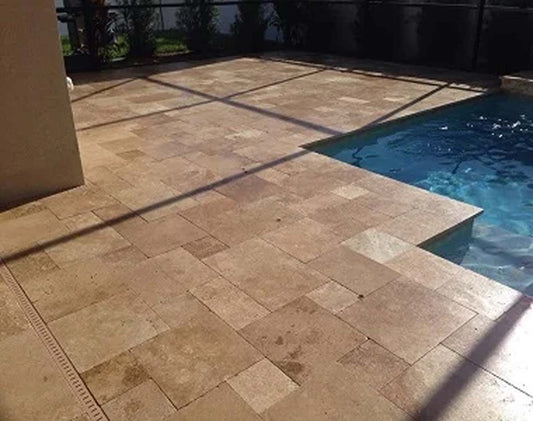
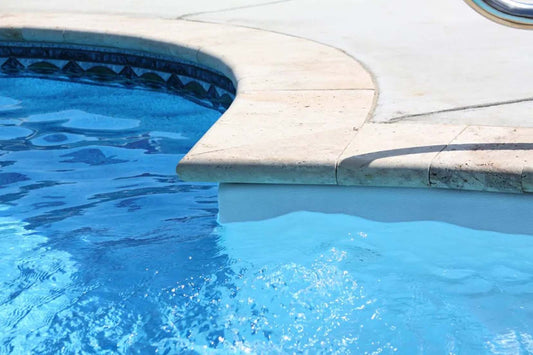
Eased edge is the squared coping profile: a flat top, a vertical face, and the sharp corner between them knocked down to a small radius so it is comfortable to sit on and does not chip. It is the profile for straight-line pools, modern decks and anywhere the design calls for a crisp edge rather than a rounded one. This page is eased edge only. The rounded alternative is bullnose pool coping, the drop-face profile for resurfacing is remodel coping, and every profile together is on the stone pool coping hub.
When eased edge is the right profile
- Rectangular and geometric pools. The squared edge reads as a clean line, and on a straight run every piece sits true.
- Modern and contemporary decks. Eased edge with a large-format marble field in a stacked or grid layout is the standard contemporary pool.
- Infinity and knife-edge details. Where the water meets the coping on a level line, a squared profile keeps the geometry honest.
- Dense stone. Marble holds a crisp eased edge better than travertine, because the pits in travertine show along a straight arris.
On a curved pool, eased edge shows every small alignment difference between pieces, and the narrow 4-inch formats that follow a tight radius are not cut in this profile — that is when bullnose is the right answer. The bullnose vs eased edge guide shows both on real pools.
Materials and colors
Eased edge is strongest in marble, where the dense stone takes a sharp, uniform arris: Ice White, Ibiza White, Bursa White, Corsica Cream, Diane Royal, Tundra Grey and Ocean Blue are all cut with an eased edge in every common size. The core travertines — Ivory, Noce, Country Classic, Walnut, Silver — are available too and suit a modern deck that still wants a warm, tumbled texture. The pool coping colors guide compares them beside water.
Sizes
| Size | Where it fits |
|---|---|
| 6x12 | Smaller pools, spa edges, tighter budgets |
| 12x24 | The most-ordered size; standard overhang on a rectangular pool |
| 14x24, 16x24 | Wider overhang, pairs with 16x24 or 24x24 field pavers |
| 24x36 | Large-format modern decks; fewer joints on long runs |
Eased edge is cut in the five sizes above. It is not available in the narrow 4x9, 4x12 and 4x8 formats or the long 12x48 and 16x48 — those are bullnose only. Match the coping width to the field paver where you can: 12x24 coping with 12x24 or 24x24 pavers, 16x24 with 16x24, so the joints align across the coping line. The coping size guide covers overhang and joint alignment.
Thickness
Both 1-1/4" (3cm) and 2" (5cm), with 2" the more common choice in this profile because a thicker squared edge reads as more substantial and modern. Match the field paver thickness so deck and coping sit flush. 2" is the choice for freeze-thaw climates, and it is what we default to around Northern Virginia, DC and Maryland.
Cost
Eased edge coping runs roughly $16 to $24 per square foot, typically around $24 — about double the matching field paver, because the edge is profiled and finished by hand and the piece is sold individually. The per-piece cost is about the same as bullnose in the same stone and size. On a rectangular pool that is usually 60 to 80 linear feet of coping, so budget it as its own line. The marble cost guide and travertine cost guide carry the full pallet math.
Before you order
Order the coping and the field from the same color at the same time so both come from matching lots. Count linear feet, divide by the piece length, and add 10% for cuts. Order a sample and look at it wet. The stone pool coping buyers guide covers overhang, setting and sealing, and the buyers guide covers the deck. Field pavers to pair with it: marble pavers, travertine pavers, or the full pool deck range.
Frequently asked questions
What is eased edge pool coping?
Coping with a squared profile: flat top, vertical face, and the corner between them softened to a small radius so it is comfortable and does not chip. It reads as a clean straight line and is the standard profile on modern and rectangular pools.
Is eased edge the same as square edge?
Nearly. A true square edge has a sharp 90-degree corner; eased edge takes that corner down to a small radius. The eased version is what is sold for pools because a sharp arris chips in use and is uncomfortable to sit on. Some suppliers call the same profile a pencil edge or a modern edge.
Can I use eased edge on a curved pool?
On gentle curves with 12x24 or larger pieces, yes, with wedge cuts. On tight radii, no — the narrow 4-inch formats that follow a small curve are only made as bullnose, and a squared edge shows every alignment difference between pieces on a radius. Freeform pools are generally bullnose.
Which stone is best for eased edge coping?
Marble. Dense stone holds a crisp, uniform arris, which is the whole point of the profile. Travertine works and suits a warmer modern deck, but its natural pitting shows along a straight edge in a way it does not along a rounded one.
Should the coping match the paver size?
Where possible, yes: 12x24 coping with 12x24 or 24x24 pavers, 16x24 with 16x24, so the joints line up across the coping line. Misaligned joints are more visible with a squared profile than a rounded one.
Does eased edge cost more than bullnose?
About the same per piece in the same stone and size. Both run roughly double the matching field paver. The choice between them is the look and the pool shape, not the price.