
-
Pistachio Limestone Leather 18x36 1-1/4" Paver
Regular price $1,409.26 USDRegular price -
Pistachio Limestone Leather 24x24 1-1/4" Paver
Regular price $1,252.68 USDRegular price -
Pistachio Limestone Leather 16x24 1-1/4" Paver
Regular price $1,800.00 USDRegular price -
Pistachio Limestone Leather 12x24 1-1/4" Paver
Regular price $1,252.68 USDRegular price -
Pistachio Limestone Leather 6x12 1-1/4" Paver
Regular price $1,708.20 USDRegular price -
Pistachio Limestone Leather French Pattern 1-1/4" Paver
Regular price $1,670.24 USDRegular price -
Sandy Beige Limestone Leather 24x24 2" Paver
Regular price $2,100.00 USDRegular price -
Sandy Beige Limestone Leather 16x24 2" Paver
Regular price $1,960.00 USDRegular price -
Sandy Beige Limestone Leather 24x24 1-1/4" Paver
Regular price $1,252.68 USDRegular price -
Sandy Beige Limestone Leather 16x24 1-1/4" Paver
Regular price $1,670.24 USDRegular price -
Sandy Beige Limestone Leather 12x24 1-1/4" Paver
Regular price $1,252.68 USDRegular price -
Sandy Beige Limestone Leather 6x12 1-1/4" Paver
Regular price $1,708.20 USDRegular price -
Sandy Beige Limestone Leather French Pattern 1-1/4" Paver
Regular price $1,670.24 USDRegular price -
Serpeggiante Limestone Leather 24x24 2" Paver
Regular price $2,100.00 USDRegular price -
Serpeggiante Limestone Leather 16x24 2" Paver
Regular price $1,960.00 USDRegular price -
Serpeggiante Limestone Leather 24x24 1-1/4" Paver
Regular price $1,252.68 USDRegular price -
Serpeggiante Limestone Leather 16x24 1-1/4" Paver
Regular price $1,670.24 USDRegular price -
Serpeggiante Limestone Leather 12x24 1-1/4" Paver
Regular price $1,252.68 USDRegular price -
Serpeggiante Limestone Leather 6x12 1-1/4" Paver
Regular price $1,708.20 USDRegular price -
Serpeggiante Limestone Leather French Pattern 1-1/4" Paver
Regular price $1,670.24 USDRegular price -
Lymra Limestone Tumbled 24x48 2" Paver
Regular price $1,138.80 USDRegular price -
Lymra Limestone Tumbled 24x36 2" Paver
Regular price $3,500.00 USDRegular price -
Lymra Limestone Tumbled 24x24 2" Paver
Regular price $2,100.00 USDRegular price -
Lymra Limestone Tumbled 16x24 2" Paver
Regular price $1,960.00 USDRegular price












Limestone pavers: colors, finishes, cost and where they beat travertine
Limestone sits between travertine and marble in density: it has a softer, warmer surface texture than marble but fewer voids than tumbled travertine. Nearly everything in this collection is pavers — around ninety of them — with a small number of limestone pool coping pieces and one 24x24 White Shellstone tile. Everything is cut at 1-1/4" (3 cm) or 2" (5 cm); the 2" pieces are the ones to pull for driveways, step treads and anywhere a vehicle rolls.
The limestone colors and how they behave
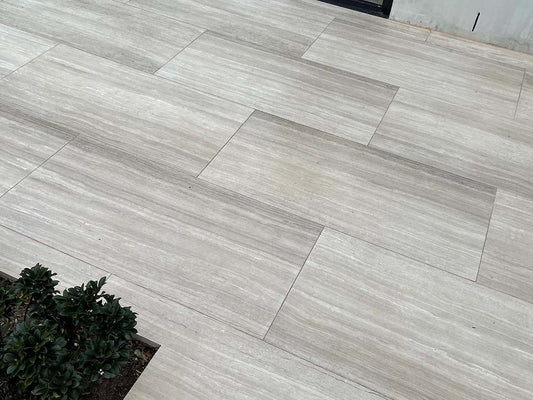
Lymra, Myra and Symra are the core beige-to-cream range and account for most of the pallets we ship. Lymra is the lightest and most even; Myra (often searched as Mayra) runs a shade warmer with more movement; Symra sits between them. All three land in the beige family. Pistachio carries a faint green-gray cast and Serpeggiante (also spelled Serpegiante) has a visible linear vein, so both are grouped under multi and patterned stone rather than a single color. Sandy Beige is a leather-finish limestone that reads close to its basalt namesake, and Marco Blue is a single cool-gray option.
Tumbled versus leather finish
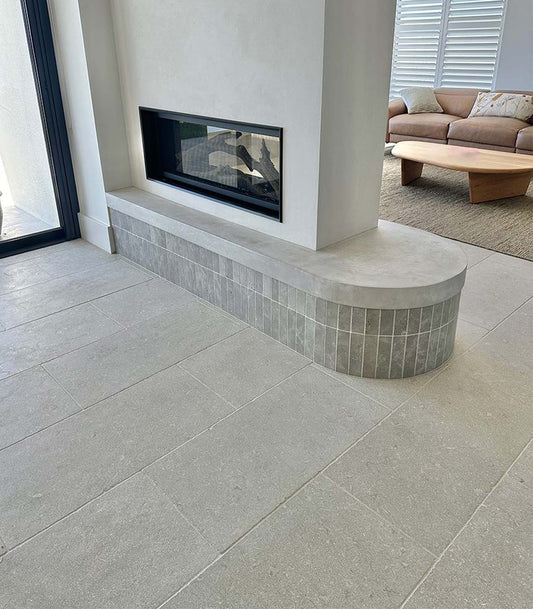
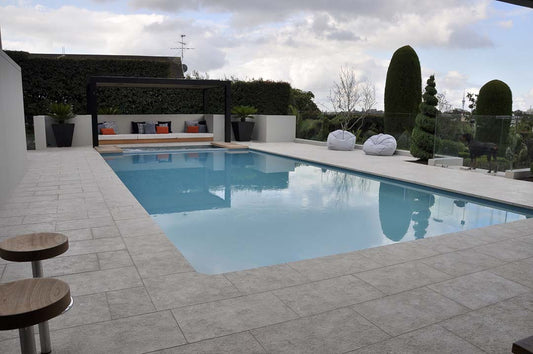
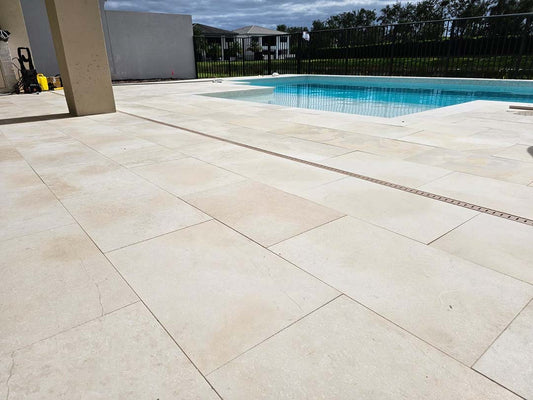
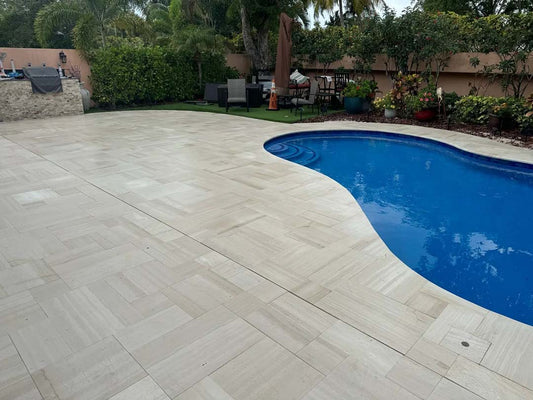
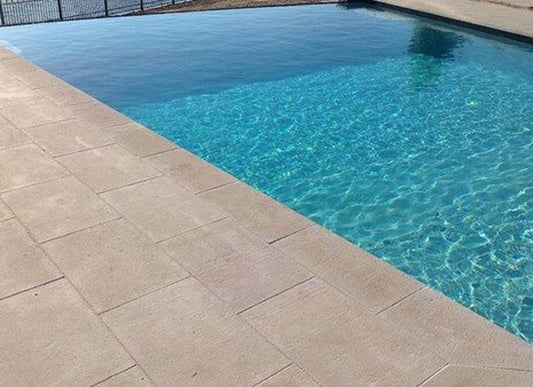
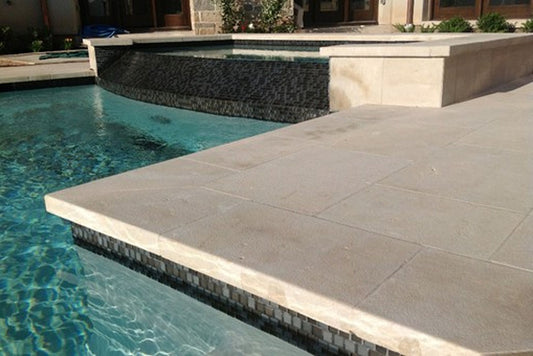
Tumbled limestone, roughly two thirds of the products here, has rounded edges and a matte face that hides scratches and gives good wet traction around a pool. Leather finish keeps square edges and a slightly textured, low-sheen face; it is the better pick for a formal patio or a clean-lined modern layout. Because limestone is a calcium-based stone like travertine, it should be sealed after installation, and the sealing and maintenance guide applies to it directly.
What limestone pavers cost
Every limestone stone here is priced at the same $9.49 per square foot for standard formats, so within limestone the color you want costs nothing extra. That puts it between travertine (typically $7.99) and classic marble ($10.99); large formats such as 24x36 and 36x36 price higher, as they do in every material. Pallet math and installed estimates are in the travertine cost guide and marble cost guide, and the same logic applies.
Sizes and layout
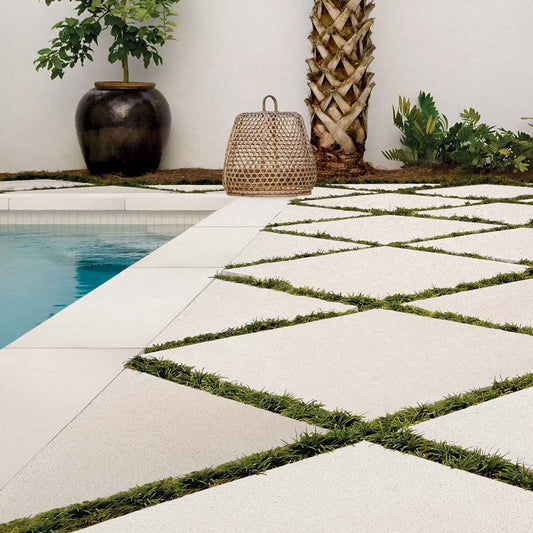
The most common formats are 12x24, 16x24 and 24x24, followed by 6x12, 24x48 and 24x36, plus French pattern sets. For a large patio, 24x24 lays fast with few cuts; 16x24 and 12x24 work well in a running bond or ashlar mix. Order 10 percent overage for straight layouts and 15 percent for patterns, per the square footage and overage guide. Order samples of two or three colors before committing a pallet, since limestone shade varies lot to lot. Thickness guidance for freeze-thaw regions is in how natural stone handles winter; limestone is dense and does well in the Mid-Atlantic at 2" on a drained base.
Frequently asked questions
Is limestone good for pavers?
Yes. It is denser than travertine, so it holds a crisp edge and takes freeze-thaw well at 2 inch on a drained base, and it is softer-textured than marble, which gives it a warm, even look with very little veining. The trade-off is that it is calcium-based and needs a penetrating sealer, like travertine and marble.
Are limestone pavers expensive?
Mid-range. Every limestone stone here is $9.49 per square foot for standard formats, between travertine at about $7.99 and classic marble at $10.99. Large formats such as 24x36 and 36x36 cost more per square foot in every material. Installed, budget roughly $18 to $30 per square foot depending on base and labor.
Which is better, travertine or limestone?
Travertine is cooler underfoot in hot sun because it is porous, and it has the pitted, tumbled look. Limestone is denser, more uniform in color, holds a sharper edge on cuts and steps, and does better in hard freeze-thaw at 2 inch. For a barefoot pool deck in the South, travertine; for a patio in the Mid-Atlantic or a formal, even-toned surface, limestone.
What are the disadvantages of limestone paving?
It etches from acids — citrus, wine, vinegar and acidic cleaners — so it needs sealing and pH-neutral care. It is not as cool underfoot as travertine in full sun. And it is softer than granite or porcelain, so heavy point loads can mark it. None of those matter on a well-sealed patio or pool deck; they matter around an outdoor kitchen.
What is the difference between Lymra, Myra and Symra?
They are three beige limestones from different quarry beds. Lymra is the lightest and most uniform, Myra (sometimes spelled Mayra) is warmer with more visible movement, and Symra falls in between. Order samples of all three side by side if you are trying to match an existing stone or house color.
Should I choose 1-1/4" or 2" limestone?
Use 1-1/4" for patios, pool decks and walkways mortar-set over concrete. Use 2" for driveways, step treads, sand-set installs, and any climate with hard freeze-thaw cycling. Both thicknesses are cut from the same stone.